Cycle Awareness · 3 min read
The Case Against Cycle Tracking Apps
By Lara Brown · 2025-12-15
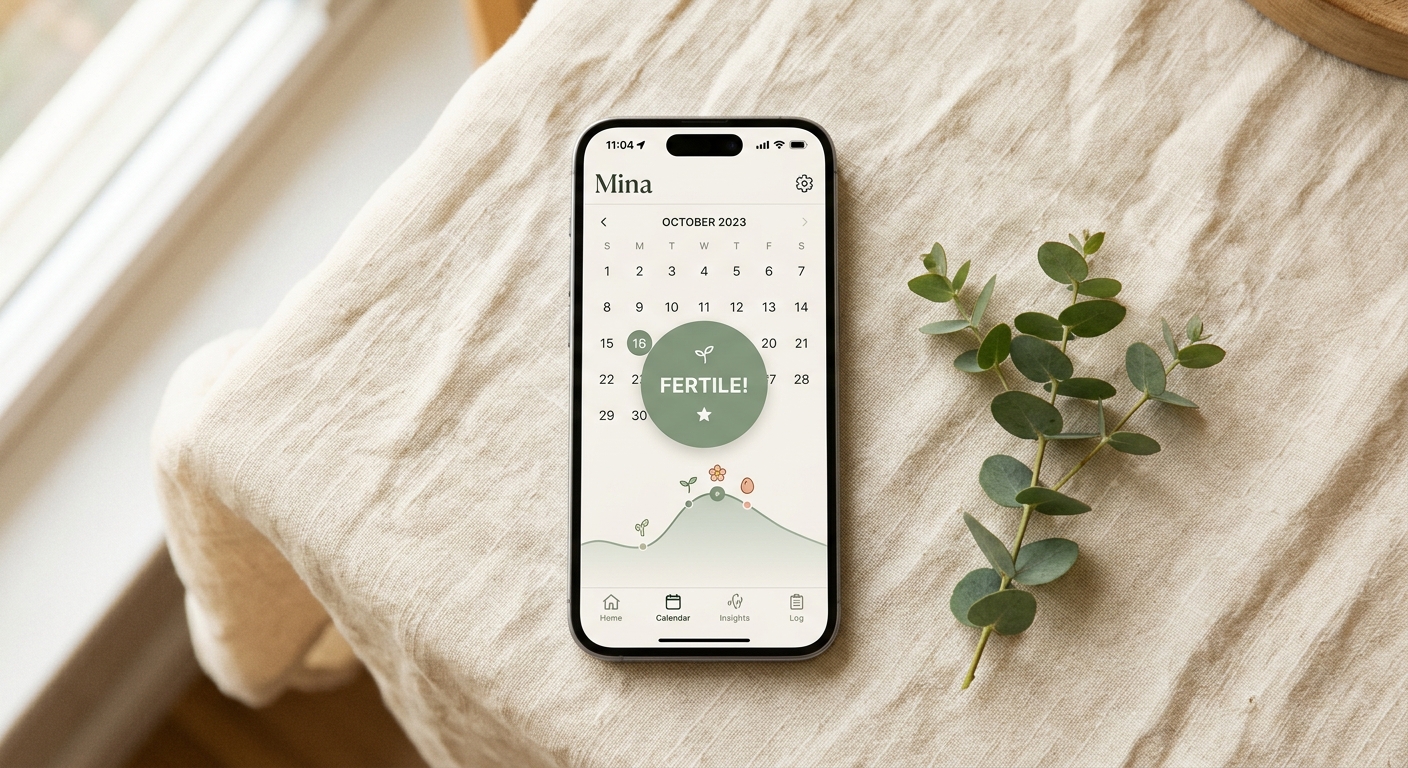
Almost every woman I work with uses a cycle tracking app. Clue, Flo, Natural Cycles, Period Tracker. They are useful, in a small, specific way. They are a place to write down your symptoms, your bleed days, your moods, your basal temperature. As a digital notebook, they are wonderful.
As a fertility prediction tool, they are dangerous.
Here is the truth. An app cannot know when you are going to ovulate. It cannot know when your fertile window is. It cannot know when it is 'safe' to have unprotected sex. What it has is aggregate data from millions of women, averaged into a prediction. Then it applies that prediction to you, based on your past cycles, and makes a confident-sounding statement about what your next cycle will do.
But every cycle is different. Ovulation is affected by stress, by illness, by sleep, by travel, by sudden changes in light exposure, by emotional events, by what you ate last week, by a brief flu in week one. If you move house, get food poisoning, fall in love, fall out of love, the app does not know. Only you do.
Natural Cycles, which is FDA-cleared as a contraceptive in the US, has a perfect-use failure rate of around 2% and a typical-use failure rate of around 7%. That is, for every 100 women using it as told, roughly 7 will become pregnant in a year. That is not nothing.
A real fertility awareness method does not rely on prediction. It relies on observation. Daily, in real time. You learn to read your own cervical mucus. You learn to take and chart your basal body temperature. You learn the rules that let you confirm, after the fact, that you have ovulated. You become the instrument. The app, at best, is a notebook.
If you want to use the apps for what they are good for, use them. Log your symptoms. Track your bleed. Notice patterns. But do not let an algorithm tell you what your own body is doing right now. Only you can know that. That is the entire point.
- Lara